Product System & Specifications

Three product lines, sixteen base models

Inherent FR, treated FR and composite systems, specified by composition, construction, weight and referenced standards.

Home/Products
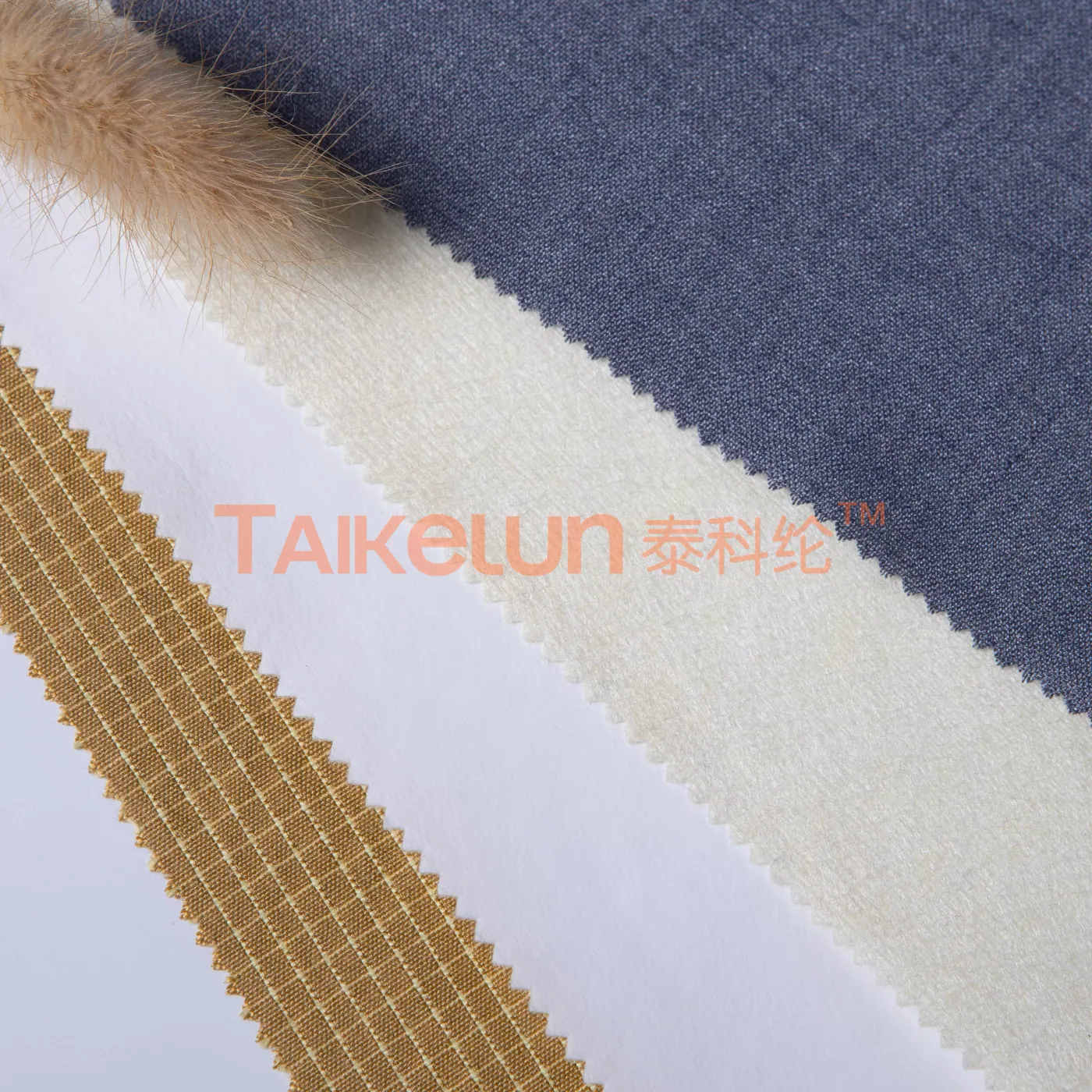
TAIKELUN inherent flame retardant fabric swatch
Inherent FR Fabric / carbonises without melting
Matrix · 16 Models

Model overview

Reference weights are typical ranges for the fibre system; actual weight, width and blend ratio are set by the order specification.

ModelNameSystemCompositionWeightReferenced standards
TK-A100Aramid FR fabricInherent FRAramid (meta-aramid base; para-aramid reinforcement available)200–350GB 8965.1 · EN ISO 11612 · NFPA 2112 · XF 10 (assembly)
TK-A200Aramid antistatic fabricInherent FR + AntistaticAramid + conductive fibre (carbon-based or metal-composite yarn, by requirement)200–330GB 8965.1 + GB 12014 · EN ISO 11612 + EN 1149-5
TK-A300Aramid / FR viscose blendInherent FR BlendAramid + FR viscose + nylon (ratio by order)180–300GB 8965.1 · EN ISO 11612 (with GB 12014)
TK-A400Aramid / wool blendInherent FRAramid + wool + nylon200–320XF 10 (inner layer) · EN ISO 11612
TK-M100Modacrylic FR fabricInherent FRModacrylic + cotton + antistatic fibre180–280GB 8965.1 · EN ISO 11612 · NFPA 2112
TK-V100FR viscose blend fabricInherent FRFR viscose + wool + nylon180–260GB 8965.1 · EN ISO 11612
TK-C100100% cotton treated FR fabricTreated FR100% cotton200–320GB 8965.1 · GB 8965.2 (welding) · EN ISO 11612 · EN ISO 11611
TK-C200Cotton / nylon treated FR fabricTreated FRCotton + nylon (ratio by order; nylon raises strength and abrasion resistance)200–300GB 8965.1 · EN ISO 11612
TK-C300Poly-cotton treated FR fabricTreated FRPolyester + cotton180–280GB 8965.1
TK-C400Cotton / nylon antistatic treated FRTreated FR + AntistaticCotton + nylon + conductive fibre (woven in)200–300GB 8965.1 + GB 12014 · EN 1149-5
TK-L100Aluminised FR fabricCompositeFR base fabric with aluminium foil (or metallised film) lamination300–520EN ISO 11612 (C) · XF 634
TK-P100PTFE laminated FR fabricCompositeFR base fabric with PTFE microporous membrane lamination (three-layer optional)200–320EN ISO 11612 · EN 343 · EN 13034
TK-P200PU / PVC coated FR fabricCompositeFR base fabric with PU or PVC coating (single or double sided)250–450EN ISO 11612 · EN 13034 · EN 14605 (by coating class)
TK-S100Molten metal splash fabricCompositeWool / aramid high-mass woven system, with an insulation layer where required350–600GB 8965.3 · EN ISO 11612 (D aluminium / E iron) · ISO 9185
TK-E100Arc flash protective fabricCompositeAramid / modacrylic / cotton composite, blended to the required protection level200–350GB 8965.4 · DL/T 320 · IEC 61482-1-1 / -1-2 · ASTM F1959
TK-H100High visibility FR fabricCompositeFluorescent FR base fabric (poly-cotton / cotton / modacrylic) with reflective tape180–280GB 20653 · EN ISO 20471 + EN ISO 11612 · ANSI/ISEA 107

Weight in g/m². reference denotes a typical range for the fibre system, not a guaranteed value per batch. Standard width 150 / 160 cm, adjustable to order.

Line 01 · Inherent FR

Inherent FR series

Flame resistance derives from the chemical structure of the fibre rather than from a finish. The fabric carbonises without melting, self-extinguishes, and retains its flame resistance after domestic and industrial washing.

LINE 01 / 6 MODELS Inherent FR Inherent FR · no loss on washing
TK-A100

Aramid FR fabric

Inherent FR / Aramid
Composition
Aramid (meta-aramid base; para-aramid reinforcement available)
Construction
Woven — plain / 2-1 twill / broken twill / satin
Weight
200–350 g/m² reference
Width
150 / 160 cm, custom available
FR mechanism
Carbonises to a dense char at high temperature; no melting or dripping; self-extinguishing once the flame is removed, with the char acting as a thermal barrier
Wash behaviour
Inherent FR; performance does not decline after domestic or industrial washing
Handle and comfort
Firm with good body; a soft finish is available for skin-contact comfort
Typical garments
Firefighting outer shell, technical rescue clothing, industrial fire-resistant workwear, hot metal positions
Finish options
Antistatic, water and oil repellent, UV-resistant, FR coating, pre-shrunk
Standards
GB 8965.1 · EN ISO 11612 · NFPA 2112 · XF 10 (assembly)
TK-A200

Aramid antistatic fabric

Inherent FR + Antistatic
Composition
Aramid + conductive fibre (carbon-based or metal-composite yarn, by requirement)
Construction
Woven; conductive yarn woven in a grid, typically at 5–10 mm pitch
Weight
200–330 g/m² reference
Width
150 / 160 cm, custom available
FR mechanism
Aramid char formation together with a continuous static dissipation path
Wash behaviour
FR does not decline; conductive performance decreases with washing, so test to the agreed cycle count
Handle and comfort
Comparable to TK-A100, with slight texture variation where conductive yarn is woven in
Typical garments
Petrochemical and oil and gas workwear, fuel station clothing, dust explosion risk areas, clean areas
Finish options
Water and oil repellent, UV-resistant, soft finish
Standards
GB 8965.1 + GB 12014 · EN ISO 11612 + EN 1149-5
TK-A300

Aramid / FR viscose blend

Inherent FR Blend
Composition
Aramid + FR viscose + nylon (ratio by order)
Construction
Woven — twill / satin
Weight
180–300 g/m² reference
Width
150 / 160 cm, custom available
FR mechanism
All constituents participate in the FR system; FR viscose provides char structure and improves moisture transport
Wash behaviour
All components are inherently FR; performance retained after washing
Handle and comfort
Better moisture absorption than pure aramid, good drape, lower heat stress in skin contact
Typical garments
FR workwear, power maintenance clothing, medium to high temperature positions, firefighting inner layers
Finish options
Antistatic, water and oil repellent, antibacterial, soft finish
Standards
GB 8965.1 · EN ISO 11612 (with GB 12014)
TK-A400

Aramid / wool blend

Inherent FR / Comfort Layer
Composition
Aramid + wool + nylon
Construction
Woven / knitted (knitted for skin-contact layers)
Weight
200–320 g/m² reference
Width
150 / 160 cm, custom available
FR mechanism
Wool is inherently flame resistant with high moisture regain and complements aramid charring
Wash behaviour
Inherent FR; wool requires attention to washing temperature and mechanical action — follow the care label
Handle and comfort
The highest comfort in the range: soft, skin-friendly and non-clinging when damp
Typical garments
Firefighting inner layers, FR underwear, FR knitwear, high-comfort protective workwear
Finish options
Antistatic, shrink-resistant, soft finish
Standards
XF 10 (inner layer) · EN ISO 11612
TK-M100

Modacrylic FR fabric

Inherent FR / Modacrylic
Composition
Modacrylic + cotton + antistatic fibre
Construction
Woven — twill / plain; knitted for stretch versions
Weight
180–280 g/m² reference
Width
150 / 160 cm, custom available
FR mechanism
Acrylic copolymer modification promotes char formation and inhibits melt dripping and afterflame
Wash behaviour
Inherent FR; performance retained after washing
Handle and comfort
Soft with a near-cotton handle and good dye brightness; balances comfort and process applicability within inherent FR
Typical garments
FR workwear, power and energy workwear, military and police training clothing, FR underwear
Finish options
Antistatic, water and oil repellent, UV-resistant, antibacterial
Standards
GB 8965.1 · EN ISO 11612 · NFPA 2112
TK-V100

FR viscose blend fabric

Inherent FR / Viscose Blend
Composition
FR viscose + wool + nylon
Construction
Woven — twill / satin
Weight
180–260 g/m² reference
Width
150 / 160 cm, custom available
FR mechanism
FR agent is incorporated at the fibre spinning stage; the viscose matrix carbonises and insulates
Wash behaviour
FR is inherent to the fibre, superior to treated systems; verification to an agreed cycle count is still recommended
Handle and comfort
The highest moisture absorption and air permeability in the range; suited to hot environments and long shifts
Typical garments
FR shirts, summer FR workwear, high-temperature work positions
Finish options
Antibacterial, antistatic, water and oil repellent
Standards
GB 8965.1 · EN ISO 11612
Line 02 · Treated FR

Treated FR series

Cotton and cotton-nylon bases finished with durable flame retardant chemistry that dehydrates the cellulose to char. The cotton handle and moisture absorption are retained, and the series suits bulk supply. Wash cycle count should be agreed in contract.

LINE 02 / 4 MODELS Treated FR Treated FR · cotton handle
TK-C100

100% cotton treated FR fabric

Treated FR / 100% Cotton
Composition
100% cotton
Construction
Woven — plain / 2-1 twill / 3-1 twill
Weight
200–320 g/m² reference
Width
150 / 160 cm, custom available
FR mechanism
Durable phosphorus-based FR finish dehydrates cellulose to char, forming a protective layer that limits afterflame
Wash behaviour
Durable finish; performance is maintained within the contract range for the agreed wash cycles
Handle and comfort
Pure cotton handle with moisture absorption and a soft touch — the most comfortable treated option
Typical garments
FR workwear, welding clothing, petrochemical workwear, power maintenance clothing
Finish options
Antistatic, water and oil repellent, easy-care, antibacterial, pre-shrunk
Standards
GB 8965.1 · GB 8965.2 (welding) · EN ISO 11612 · EN ISO 11611
TK-C200

Cotton / nylon treated FR fabric

Treated FR / Cotton-Nylon
Composition
Cotton + nylon (ratio by order; nylon raises strength and abrasion resistance)
Construction
Woven — twill / broken twill / ripstop
Weight
200–300 g/m² reference
Width
150 / 160 cm, custom available
FR mechanism
The cotton component is charred by the FR finish; nylon is used in blend to control melt-drip risk
Wash behaviour
Durable finish; the abrasion resistance of nylon suits workwear in frequent use
Handle and comfort
Slightly firmer than pure cotton, with better dimensional stability and less distortion
Typical garments
Industrial protective workwear, aerospace manufacturing, shipyard workwear, oilfield clothing
Finish options
Antistatic, three-proof, easy-care, antibacterial
Standards
GB 8965.1 · EN ISO 11612
TK-C300

Poly-cotton treated FR fabric

Treated FR / Poly-Cotton
Composition
Polyester + cotton
Construction
Woven — plain / twill
Weight
180–280 g/m² reference
Width
150 / 160 cm, custom available
FR mechanism
FR finishing; the melt-drip tendency of the polyester component is controlled by blend and finish
Wash behaviour
Durable finish; retention is judged against the agreed cycle count
Handle and comfort
Crease resistant, quick drying and easy to care for; suits workwear washed frequently
Typical garments
General FR workwear, municipal and environmental services clothing, workshop clothing
Finish options
Antistatic, water and oil repellent, easy-care
Standards
GB 8965.1
TK-C400

Cotton / nylon antistatic treated FR

Treated FR + Antistatic
Composition
Cotton + nylon + conductive fibre (woven in)
Construction
Woven — twill, with conductive yarn grid
Weight
200–300 g/m² reference
Width
150 / 160 cm, custom available
FR mechanism
Cotton charred by the FR finish, plus conductive yarn providing a static dissipation path
Wash behaviour
FR finish verified to the agreed cycle count; conductive performance also declines with washing
Handle and comfort
Predominantly a cotton handle, firmer than pure cotton
Typical garments
Petrochemical and energy workwear, fuel depot clothing, powder processing workwear
Finish options
Three-proof, easy-care, antibacterial
Standards
GB 8965.1 + GB 12014 · EN 1149-5
Line 03 · Composite

Composite and multi-function

Coatings and functional finishes applied to FR base fabrics, for radiant heat reflection, liquid chemical barriers, molten metal splash, arc flash and high visibility.

LINE 03 / 6 MODELS Composite Composite · higher-order hazards
TK-L100

Aluminised FR fabric

Composite / Radiant Heat
Construction
FR base fabric with aluminium foil (or metallised film) lamination
Weight
300–520 g/m² including laminate reference
Width
150 / 160 cm, custom available
Protection mechanism
The aluminium layer reflects radiant heat and reduces heat transfer to the body; the base fabric provides flame resistance and strength
Performance
Strong radiant heat protection with low air permeability; suited to short-duration proximity work
Typical products
Heat-insulating suits, firefighting proximity hoods, furnace-side working clothing, proximity rescue equipment
Options
Antistatic base fabric, FR sewing components
Standards
EN ISO 11612 (C) · XF 634
TK-P100

PTFE laminated FR fabric

Composite / Waterproof Breathable
Construction
FR base fabric with PTFE microporous membrane lamination (three-layer optional)
Weight
200–320 g/m² reference
Width
150 / 160 cm, custom available
Protection mechanism
The PTFE membrane blocks liquid water and some chemical liquids while allowing water vapour to pass
Performance
Balances waterproofing and breathability; more comfortable over long shifts than coated systems
Typical products
Firefighting outer garments, chemical protective clothing, outdoor FR workwear, offshore protective clothing
Options
Antistatic, oil repellent
Standards
EN ISO 11612 · EN 343 · EN 13034
TK-P200

PU / PVC coated FR fabric

Composite / Chemical Barrier
Construction
FR base fabric with PU or PVC coating (single or double sided)
Weight
250–450 g/m² including coating reference
Width
150 / 160 cm, custom available
Protection mechanism
A dense coating forms a liquid barrier against oils, acids, alkalis and soiling
Performance
The strongest barrier and the easiest to clean; low breathability, suited to heavy soiling and wet work
Typical products
Chemical aprons and sleeves, oil-contaminated workwear, cleaning workwear, FR tarpaulins and covers
Options
Antistatic, UV-resistant, higher FR level
Standards
EN ISO 11612 · EN 13034 · EN 14605 (by coating class)
TK-S100

Molten metal splash fabric

Composite / Molten Metal
Composition and construction
Wool / aramid high-mass woven system, with an insulation layer where required
Weight
350–600 g/m² reference
Width
150 cm, custom available
Protection mechanism
High mass per unit area slows liquid metal penetration; wool and aramid carbonise rather than melt, avoiding adhesion burns
Performance
Splash and burn-through resistance are primary; weight is high, so garment design should distribute the load
Typical products
Steel and foundry workwear, ladle handling clothing, aluminium processing protective clothing, welding aprons
Options
Antistatic, water and oil repellent, FR coating
Standards
GB 8965.3 · EN ISO 11612 (D aluminium / E iron) · ISO 9185
TK-E100

Arc flash protective fabric

Composite / Arc Flash
Composition
Aramid / modacrylic / cotton composite, blended to the required protection level
Construction
Woven — twill / broken twill, balancing strength and mobility
Weight
200–350 g/m² reference
Width
150 / 160 cm, custom available
Protection mechanism
Inherent FR fibres resist the instantaneous heat of an arc, preventing fabric rupture and afterflame
Performance
The core measure is arc rating (ATPV / EBT), derived from the operating current and clearing time at the site
Typical garments
Live-line workwear, substation maintenance clothing, switching clothing, emergency repair workwear
Options
Antistatic, high visibility, UV-resistant
Standards
GB 8965.4 · DL/T 320 · IEC 61482-1-1 / -1-2 · ASTM F1959
TK-H100

High visibility FR fabric

Composite / Hi-Vis + FR
Composition and construction
Fluorescent FR base fabric (poly-cotton / cotton / modacrylic) with reflective tape
Weight
180–280 g/m² reference
Width
150 / 160 cm, custom available
Protection mechanism
Fluorescent dye provides daytime visibility, retroreflective tape provides night visibility, and the base fabric provides flame resistance
Performance
Visibility and flame resistance must both hold; colour fastness of fluorescent shades under washing and sunlight is critical
Typical garments
Road works clothing, traffic enforcement clothing, emergency response clothing, airport and port workwear, municipal workwear
Options
Antistatic, waterproof, higher FR level
Standards
GB 20653 · EN ISO 20471 + EN ISO 11612 · ANSI/ISEA 107
Comparison

Comparison of the three systems

DimensionInherent FRTreated FRComposite
Source of FRFibre chemical structureFinish applied to the fibreFR base fabric plus coating or lamination
Wash durabilityNo decline on washingDeclines with cycles; count to be agreedDepends on base fabric and composite durability
HandleFirm; soft finish availableCotton handle, closest to everyday fabricFirmer and heavier depending on the composite layer
Weight range180–350 g/m²180–320 g/m²200–600 g/m²
Process requirementHigher requirement on blend designDepends on finish stabilityMultiple processes, most control points
ComfortModerate; improved by blendingHighLow to moderate
Principal constraintHigher requirement on blend designDecline after washing; easily mistaken for permanent FRTrade-off in weight and air permeability
Typical useFire, petrochemical, power, defenceGeneral workwear, welding, bulk supplyInsulation, chemical, metal, arc
Finishing Matrix

Functional finishes

Finishes can be combined as required. Some combinations conflict, and require joint verification.

FinishFunctionEffectDurabilityProcess note
FR finishingRaises FR levelDehydrates cellulose to char, limiting afterflameDurable types withstand repeated washing (by process)Some conflict with soft finishes
AntistaticDissipates static chargeConductive yarn woven in, or antistatic agent appliedWoven yarn durable; agents decline with washingWoven yarn preferred
Water, oil and soil repellentReduces combustible and soil soilingLowers surface energy; liquids bead and run offModerate; verify against wash countReduces moisture absorption
UV resistantSlows ageing and fadingHigher UPF; less strength loss in sunlightLongAdvisable for outdoor workwear
Antibacterial and anti-miteInhibits microbial growthReduces odour and cross-contamination riskModerate; declines with washingRequires joint verification with FR finishing
Pre-shrinkingControls dimensional changeLower shrinkage after washingPermanentStandard step for bulk workwear
Soft finishImproves next-to-skin comfortLower friction, improved drapeModerateExcess reduces FR performance and strength
Firm finishImproves body and shapeBetter appearance and crease resistanceModerateCommon for uniforms
Easy-careReduces ironingResin finish improves recoveryLongFormaldehyde release to be monitored
Fluorescent dyeingImproves visibilityMeets colour requirements for hi-vis clothingDepends on dye systemFR performance to be verified in parallel
Lamination & Coating

Composite processes

The composite layer defines the protection target and the associated performance trade-off.

ProcessConstructionPrimary protectionBreathabilityWeight impactTypical use
Aluminised laminationBase fabric + aluminium foil / metallised filmRadiant heat reflectionVery lowModerateHeat-insulating suits, furnace-side work, firefighting proximity equipment
PTFE membrane laminationBase fabric + microporous membrane (three-layer optional)Water and chemical liquidHighLowFirefighting outer garments, chemical protective clothing, offshore work
PU coatingBase fabric + PU coatingLiquid barrier, abrasion resistanceLowModerateOil-contaminated workwear, cleaning work, aprons and sleeves
PVC coatingBase fabric + PVC coatingStrong liquid and chemical barrierVery lowHighHeavy chemical protection, covers, demanding wet work

Lamination and coating change FR performance and handle; the finished composite must be re-evaluated and base fabric data cannot be carried over.

Customization & Delivery

Customization and delivery

TAIKELUN produces to order; lead time depends on blend complexity, number of finishes and order quantity.

01

Composition and blend ratio

Fibre ratios adjusted within a given FR system to balance FR level, handle, strength and processing. Raising the FR viscose content improves moisture absorption; raising aramid content increases thermal stability.

02

Weight and width

Reference weights are typical ranges and can be adjusted; standard width 150 / 160 cm, adjustable to cutting layout requirements to reduce offcut waste.

03

Construction

Plain, twill, broken twill, satin, ripstop, double-layer and composite constructions selected to strength, drape and appearance requirements.

04

Colour and shade

Matched to customer shade cards or Pantone references. Reactive dyeing for cotton and viscose, disperse dyeing for polyester, with yarn dyeing or dope dyeing available for higher fastness.

05

Finish combinations

Antistatic, three-proof, UV-resistant, antibacterial, pre-shrunk, soft or firm finishes combined by application; conflicting processes are verified jointly before the specification is confirmed.

06

Testing and documentation

Testing to the standards and items agreed in contract, with conclusions for the corresponding model and batch; technical documents are issued under Zhejiang Taihui Textile Co., Ltd.

Minimum order quantity and lead time: Both depend on blend complexity, number of finishes, order quantity and testing requirements, and are confirmed commercially. Standard lines are typically delivered more quickly than custom lines; custom lines are scheduled against sampling, testing and production milestones. Estimated quantity and delivery date are required at enquiry.
FAQ

Frequently asked questions

How should inherent FR and treated FR be chosen between?

Wash count and service life are the determining factors. Where garments are industrially laundered, worn over a long period and washed frequently, inherent FR offers more consistent performance — treated FR declines after a certain number of washes and the replacement cycle shortens accordingly.

For short-term projects or low-frequency laundering, a treated system remains appropriate where it meets the standard.

How many washes does treated FR withstand?

This depends on the finishing process and the washing conditions (temperature, detergent, mechanical action). Durable finishes typically withstand a number of industrial wash cycles, but the specific count must be stated in the contract and supported by test results at that cycle count.

Is the reference weight a guaranteed value?

No. Reference weight indicates the typical range for the fibre system and is used to judge whether a fabric suits a given use, such as an outer shell or a liner. Actual supply weight is set by the order specification and inspected per batch. A range is given because weight is determined together with strength, drape and end use.

Will there be colour variation between batches of the same model?

Some variation between dye lots is inherent, and the industry controls it through grey scale ratings, generally grade 4 or above subject to contract. Recommended practice: produce large orders in a single run; group dye lots on split deliveries; approve a colour sample before bulk production for colour-critical uniform projects.

Does compliant fabric mean a compliant garment?

No. Sewing thread, zips, reflective tape, interlinings, components and construction all affect assembly performance. For example, the thermal performance of firefighting clothing as an assembly is not equivalent to single-layer fabric data. Projects involving assembly certification should include garment-stage verification.

Can FR, antistatic and water repellent performance be combined?

In most cases yes, subject to joint verification. The mechanisms differ and combinations can work against each other — repellent finishes reduce moisture absorption, and excess soft finish reduces FR performance and strength. The approach is to verify a combined sample before production rather than to commit in advance.

Can fabric be matched to our shade card or a Pantone reference?

Yes. A physical shade card or Pantone reference is sufficient to arrange a lab dip. Note that fluorescent shades (for hi-vis fabrics) are limited by the dye system and cover a narrower colour range, and FR performance must be verified in parallel.

What is the process if parameters change after sampling?

Sampling, approval, revision and re-approval, until production parameters are locked. Changes to weight, blend ratio or finish combination all count as revisions and require re-sampling; in some cases retesting as well. Changes are best concentrated in the sampling stage, with parameters locked before production to preserve batch consistency.

Selection Path

Selection sequence

Selection begins with the hazard rather than the product category. The order is hazard, then standard, then fibre, weight and process.

STEP 01

Define the hazard

Flame and flash fire, convective heat, radiant heat, contact heat, molten metal splash, arc flash, static, chemical penetration. Hazards may combine and should be listed with priority.

STEP 02

Confirm the standard

The target standard follows the garment specification and destination market. The standard determines test items and pass criteria, and therefore the range of applicable fibre systems.

STEP 03

Set fibre and process

Within the standard, select fibre blend and construction against wash count, comfort, colour fastness, weight and handle, then proceed to sampling.

Sample Kit

Sampling comes first.

A4 swatches, shade cards and batch test summaries, with garment sampling available for verification.